


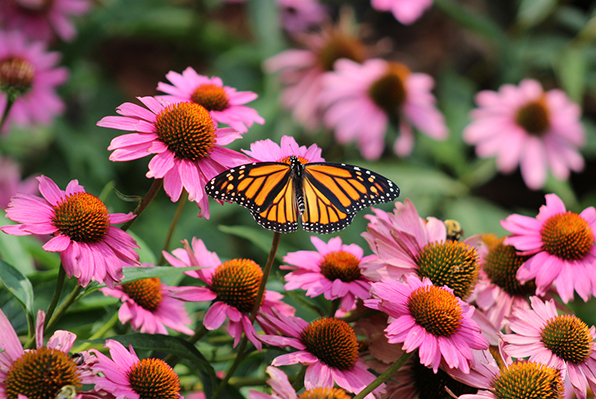
Pollinator gardens have grown in popularity over the past few years as pollinator populations decline. According to the National Park Service, habitat loss, non-native species of plants, and pesticides are among the factors contributing to dwindling pollinator numbers. How does a pollinator garden help? By creating an environment that is pollinator friendly.
Bees and butterflies are some of the key pollinators that help keep our ecosystem in balance by allowing plants to reproduce and grow the fruits and vegetables we eat. In fact, the USDA states that bees pollinate more than a third of the crops in the world. We’ve found some tips to help you start your own pollinator garden.
Know when and what to plant
Each region has a multitude of native plant varieties that thrive and attract pollinators. From early spring to late fall, blooms will keep pollinators busy. Using native plants is key to a flourishing pollinator garden because they are adapted to your climate and soil, making them ideal for your local pollinators.
The USDA has a plant hardiness zone map to help educate gardeners. You can also check with a local college extension office or conservation board for pollinator garden resources. To get you started, here are some plant types that attract pollinators:
- Butterfly bush – As the name suggests, this plant attracts butterflies to your yard. Their spring and summer blooms love full sun and thrive in zones 5 through 9.
- Coneflowers – Coneflowers are another full-sun flower that attracts butterflies as well as bees and birds. With a variety of colors, the summer and fall blooms can be enjoyed by pollinators in zones 3 through 9.
- Lavender – One of the most familiar plants is also great for bees. Lavender in zones 6 and higher are perennial and annual in zones below 6. When planted in spring, pollinators can enjoy lavender through fall. As a bonus, lavender repels mosquitoes and flies!
- Zinnias – Monarch butterflies are big fans of zinnias. These flowers like full sun but can take some partial shade too. The best part? Zinnias are annuals for all zones and will last until the first frost of the season.
If there is still a chance for frost where you live, start your garden indoors in containers. Get seeds germinating inside so they will be ready to plant once things start to thaw.
Provide some shelter
While most pollinators have their own defenses against predators, sometimes they need a little help. Planting your flowers close together can help camouflage pollinators from their predators. Grasses and shrubs also offer insects a form of shelter.
Some pollinators like to nest in the ground or in small open spaces. Pieces of dead wood can be used by pollinators like bees as well to hide and nest. Consider planting your pollinator garden hear a stump or adding a fallen branch to your garden.
Plant alternatives
If you want to attract pollinators to your yard but don’t have a green thumb, don’t worry, you can still create a pollinator friendly environment. Add a birdbath or small fountain to your yard to provide pollinators with a source of water.
Another option is to get a hummingbird feeder. These can hang from anywhere and are ideal for small spaces. You can also set out a shallow dish as an artificial food source. Sugar water is a good alternative for pollinators if you don’t have any flowers.
Now that you know what all the buzz about pollinator gardens is, you can create one of your own. If you take the time to plan it out, you can enjoy the blooms and butterflies all season long.