


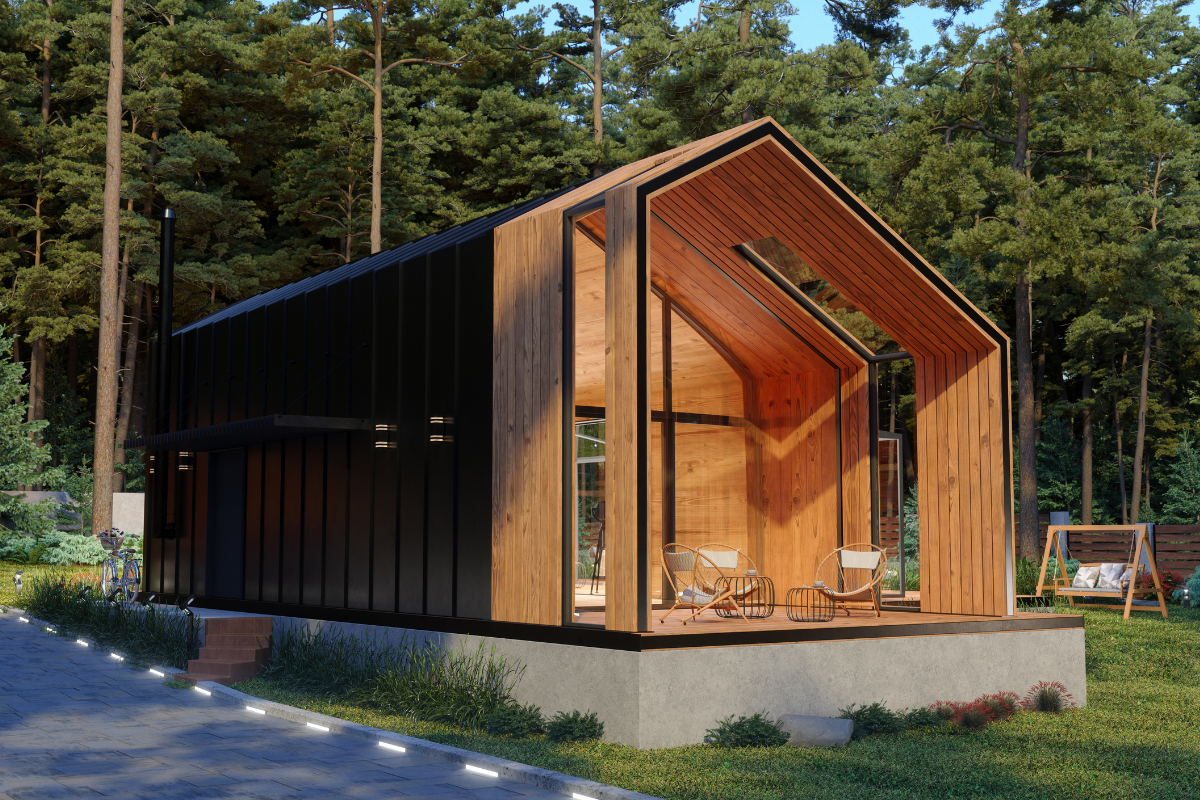
It’s no secret that there is a shortage of affordable housing available in most markets throughout the country. This combined with rising housing costs has created a unique challenge in many communities looking to accommodate growing housing demand. However, there is one solution that’s gaining favor in many areas—accessory dwelling units (ADUs).
What is an ADU?
An ADU is a secondary housing unit on your home or property. You may know it by one of its countless other common names like granny flat, carriage house, in-law suite or garage apartment. No matter what you call them, the main reasons people build ADUs are either to gain incremental income via rent or to house family members.
Other attributes that distinguish ADUs include:
- Smaller than the main residence.
- Include a fully functioning kitchen and bathroom.
- Attached or detached from the single-family residence, like an apartment over an attached or detached garage, or can be a separate structure standing apart from the main residence.
- Must have a separate entrance from the outside and does not have a way to enter directly from the main residence.
- Does not have a separate address or mailbox from the main residence.
However, a traditional duplex does not qualify as an ADU. A duplex is defined as two dwelling units with unique addresses/mailboxes typically with only one owner of record on the parcel. In addition, duplexes must be built on a single residential lot that is zoned for multifamily construction.
Can an ADU be a primary residence?
Since an ADU is located on a single family residentially zoned lot (versus a lot zoned for multi-family properties) it may be considered a primary residence. The property owner may choose whether they want to occupy the ADU themselves or if they want to open it up for someone else.
Can I build an ADU on my property?
Building an ADU on your property will depend on your state and local zoning laws. These regulations will also dictate what type of ADU you may build on your property. Be sure to check with your local ordinances to understand the ADU requirements for your area. ADU financing can also help pay for the construction of an ADU.
What states allow ADUs?
Because local ordinances vary from state to state, you may not be able to build an ADU in every state. Before beginning your ADU financing process, make sure to check with your local zoning commission to make sure your state allows the construction of accessory dwelling units.
How to build an ADU
Today, whether building a new home or buying an existing property, more and more people are looking for layouts with an ADU or ADU potential, such as garage or basement suitable to convert. There are even some instances where the existing structure may be an ADU (think of a garage apartment, carriage house, or barn with living quarters), and the homeowner is considering adding a larger single-family residence to the parcel. Either way, there are special guidelines and restrictions that apply to ADU financing.
PrimeLending’s Construction Loan Program is designed to finance the construction of a new single-family residence with an ADU, adding an ADU to an existing single-family residence, or adding a single-family residence to an existing ADU. Some additional restrictions apply, so it’s important to work with a lender who understands the special requirements associated with ADUs.
Are there design standards for ADUs?
As with any construction project, you must adhere to certain design standards when building your ADU. Design standards for ADUs include a complete bathroom, a fully functioning kitchen, must be smaller than the principal property and must have its own entrance separate from the primary residence. As always, check with your city for ADU design regulations.
How many ADUs can you have on a property?
The number of ADUs that you can have on a single property will depend on zoning laws and where your mortgage financing comes from. For instance, Fannie Mae only permits one ADU on the property of a primary single family residence and does not permit ADUs with two- to four-unit dwellings. Be sure to check with your local officials about ADU rules and make sure they meet HOA guidelines, if applicable.
Can I rent my ADU?
Some homeowners hope to rent out their ADU. But, before you build, make sure you check what the local laws are in your state and city regarding using an ADU as a rental unit. Some areas may allow homeowners to rent their ADU while others may prohibit any short-term rental use.
Product info as of 8/1/24, subject to change.